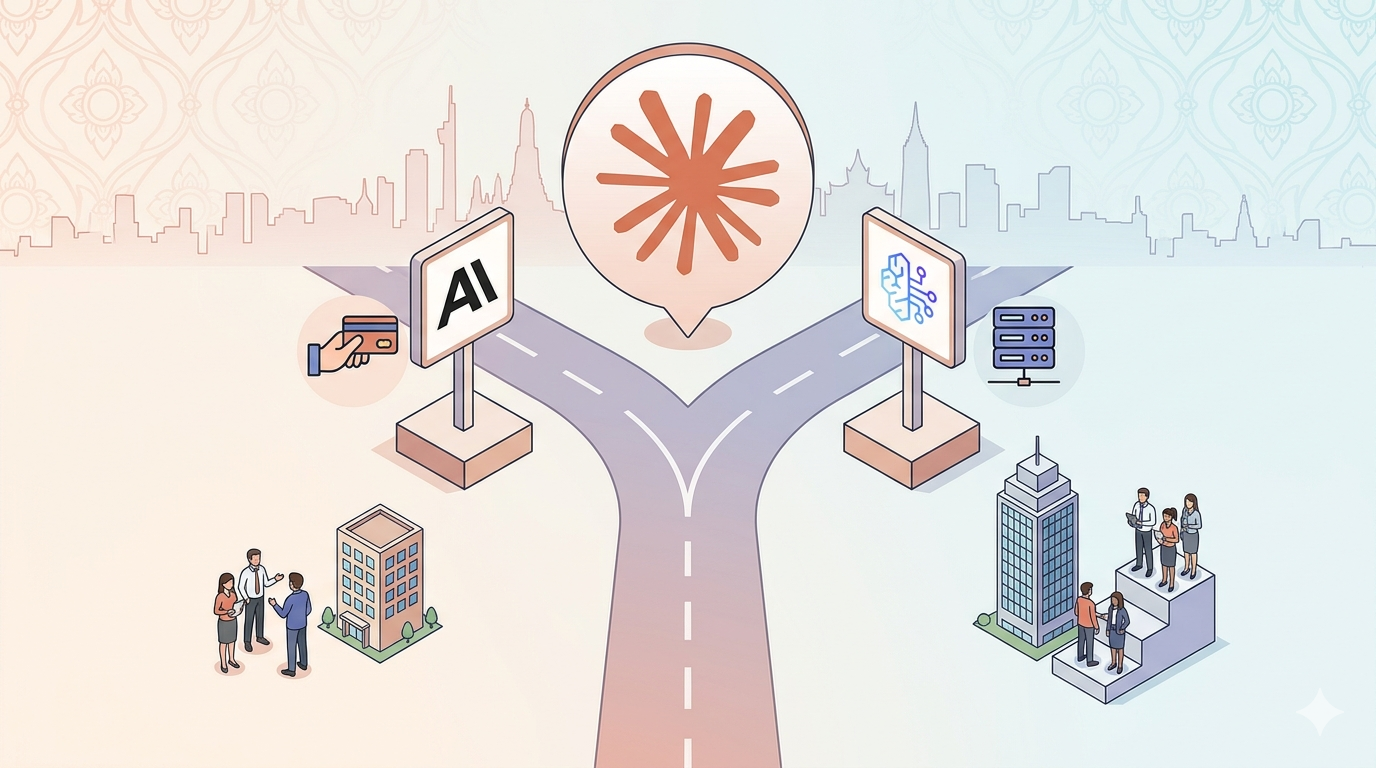
The question keeps coming up in Thai tech circles: if we're going to deploy Claude in our organisation, is it better to buy directly from Anthropic or go through AWS Bedrock?
Two cases from the Thai market recently landed at diametrically opposite answers — and both were correct for their situations.
คำถามนี้วนมาเรื่อยๆ ในวงการ tech ไทย ถ้าจะ deploy Claude ในองค์กร ซื้อตรงจาก Anthropic ดีกว่า หรือไปผ่าน AWS Bedrock?
มีสองกรณีจากตลาดไทยที่เพิ่งได้คำตอบต่างกันสุดขั้ว และทั้งคู่ถูกต้องสำหรับตัวเอง
Case 1: Large Corporate Group — Chose Bedrock กรณีที่ 1: กลุ่มธุรกิจ Corporate ขนาดใหญ่ — เลือก Bedrock
A large Thai corporate conglomerate recently signed with AWS Thailand to use Claude via Amazon Bedrock. The initial deployment focuses on Cowork and exploring further use cases across their operations.
The deciding factor wasn't the model — it was what came bundled with it. The AWS contract packaged training and technical support as a single deal.
For an organisation with thousands of employees, those line items are significant if arranged separately. Bundling them into one contract reduces both procurement overhead and internal IT burden — a cost that never appears in a straightforward price comparison.
กลุ่มธุรกิจ corporate ขนาดใหญ่รายหนึ่งในไทยเพิ่งเซ็นสัญญากับ AWS Thailand เพื่อใช้ Claude ผ่าน Amazon Bedrock โดย deploy ระยะแรกเน้นที่ Cowork และสำรวจ use-case อื่นๆ
สิ่งที่ตัดสินใจได้ไม่ใช่ตัวโมเดล แต่คือ สิ่งที่ bundle มาด้วย สัญญา AWS ครั้งนี้รวม training และ technical support เป็นแพ็คเกจเดียว
สำหรับองค์กรที่มีพนักงานนับพัน รายการเหล่านั้นมีมูลค่าไม่น้อยถ้าต้องจัดการแยกกัน การ bundle ไว้ในสัญญาเดียวลดทั้ง procurement overhead และ IT burden ซึ่งเป็นต้นทุนที่ไม่ปรากฏในการเปรียบราคาตรงๆ
Case 2: Mid-size Tech Startup — Chose Enterprise Direct กรณีที่ 2: สตาร์ทอัพ Tech ขนาดกลาง — เลือก Enterprise Direct
A Bangkok-based startup building an event management platform chose the Enterprise Plan directly from Anthropic — self-service, no intermediary.
Their logic was straightforward: per their account, the Enterprise Plan runs approximately $20 per person per month — a predictable fixed cost. Token billing on Bedrock creates budget variance that's harder to plan around.
Variance is risk. For a startup managing burn rate, a fixed cost is far easier to control than consumption billing, even at equivalent average spend.
สตาร์ทอัพ tech ที่ทำ platform จัดการงาน event ในกรุงเทพฯ เลือกซื้อ Enterprise Plan ตรงจาก Anthropic ผ่าน self-service โดยไม่ผ่านคนกลาง
logic ตรงมาก ตามที่ทีมให้ข้อมูล Enterprise Plan อยู่ที่ประมาณ $20 ต่อคนต่อเดือน — ต้นทุนคงที่ที่วางแผนได้ ต่างจาก token billing บน Bedrock ที่สร้างความไม่แน่นอนในการตั้ง budget
Variance คือความเสี่ยง สำหรับสตาร์ทอัพที่ต้อง control burn rate ต้นทุนคงที่ควบคุมได้ง่ายกว่า consumption billing แม้ค่าเฉลี่ยจะใกล้เคียงกัน
A Common Misconception: Token Prices Are Identical จุดที่มักเข้าใจผิด: ราคา Token เท่ากัน
AWS Bedrock prices Claude models identically to the direct Anthropic API. There is no token discount for going through AWS.
Bedrock's value is in ecosystem integration, bundled services, and existing commercial relationships — not cheaper tokens. Worth noting: Bedrock now also provides access to the full Claude product suite (Cowork, Claude.ai, and related tools) through enterprise admin configuration — not just API access for developers. The two paths are becoming more equivalent in what they offer, which makes billing model and vendor relationship the more decisive factors.
AWS Bedrock ตั้งราคาโมเดล Claude เท่ากับ Anthropic API โดยตรง ไม่มีส่วนลด token จากการซื้อผ่าน AWS
คุณค่าของ Bedrock อยู่ที่ ecosystem integration, บริการเสริม, และความสัมพันธ์เชิงพาณิชย์ที่มีอยู่ ไม่ใช่ token ที่ถูกกว่า ควรรู้เพิ่มเติมว่า ปัจจุบัน Bedrock รองรับการเข้าถึง Claude product suite เต็มรูปแบบ (Cowork, Claude.ai และเครื่องมืออื่นๆ) ผ่าน enterprise admin configuration แล้ว ไม่ใช่แค่ API สำหรับนักพัฒนา สองเส้นทางนี้จึงใกล้เคียงกันมากขึ้นในแง่ผลิตภัณฑ์ที่ได้รับ ทำให้รูปแบบการจ่ายเงินและความสัมพันธ์กับ vendor กลายเป็นปัจจัยที่ชี้ขาดกว่า
A Simple Comparison ตารางเปรียบง่ายๆ
| Anthropic Enterprise Direct | AWS Bedrock | |
|---|---|---|
| Priceราคา | Flat per-user/monthต่อ user/เดือน (คงที่) | Per token (variable)ต่อ token (ผันแปร) |
| Cost Certaintyความแน่นอนต้นทุน | Highสูง | Low–Mediumต่ำ–ปานกลาง |
| Claude Products (Cowork, chat, etc.)Claude Products (Cowork, chat ฯลฯ) | ✓ | ✓ (via enterprise admin config)✓ (ผ่าน enterprise admin config) |
| API Access | ✓ | ✓ (native)✓ (native) |
| Add-on Servicesบริการเสริม | Limitedจำกัด | Negotiable (training, support)เจรจาได้ (training, support) |
| Integration | Standalone | Native AWS ecosystem |
| Data residency | Anthropic-managed | AWS region-based |
| Best Forเหมาะกับ | SMEs, startups, self-sufficient teamsSME, สตาร์ทอัพ, ทีม tech ที่ self-sufficient | Enterprises already on AWSองค์กรใหญ่ที่ใช้ AWS อยู่แล้ว |
Why Thailand's Context Changes the Equation ทำไมบริบทตลาดไทยเปลี่ยนสมการนี้
Most Thai organisations don't have the internal AI teams or direct Anthropic relationship leverage that US or EU enterprises do. In those markets, large organisations negotiate multi-year SLAs with Anthropic at an account-led level — a tier that doesn't exist in the self-service path. Anthropic is signing multi-year contracts in banking, insurance, and pharma with organisations that have the legal and compliance teams to negotiate terms directly.
In Thailand, two factors skew the equation toward Bedrock for larger organisations. First, many already have AWS contracts — if an Enterprise Discount Programme (EDP) exists, Bedrock usage can draw down against an existing commitment, meaningfully changing the cost structure. Second, most large Thai organisations still depend on system integrators for infrastructure management, which means the training and support Bedrock can bundle are worth more than their line-item cost implies.
The infrastructure side has also matured. The launch of the AWS Asia Pacific (Thailand) Region in 2025, and Claude's availability via Global Cross-Region Inference in Thailand, means Bedrock is no longer a theoretical option. For organisations in regulated industries facing data residency requirements, this changes the decision significantly.
องค์กรส่วนใหญ่ในไทยไม่ได้มีทีม AI ภายในหรืออำนาจต่อรองกับ Anthropic โดยตรงเหมือนองค์กรใน US หรือ EU ในตลาดนั้น บริษัทใหญ่เจรจาสัญญา SLA หลายปีในระดับ account-led ซึ่งต่างจาก self-service path อย่างสิ้นเชิง Anthropic กำลังเซ็นสัญญาหลายปีในธนาคาร ประกันภัย และเภสัชกรรม กับองค์กรที่มีทีม legal และ compliance พอที่จะเจรจา SLA ตรงได้
ในไทย สองปัจจัยทำให้ตาชั่งเอียงไปทาง Bedrock สำหรับองค์กรขนาดใหญ่ ประการแรก หลายองค์กรมีสัญญา AWS อยู่แล้ว — ถ้ามี Enterprise Discount Programme (EDP) การใช้ Bedrock สามารถ draw down against commitment เดิมได้ เปลี่ยนโครงสร้างต้นทุนอย่างมีนัยสำคัญ ประการที่สอง องค์กรใหญ่ไทยส่วนใหญ่ยังพึ่ง system integrator ในการดูแลระบบ ทำให้ training และ support ที่ bundle มากับ Bedrock มีมูลค่ามากกว่าที่ตัวเลขราคาจะบอก
ด้าน infrastructure ก็พัฒนาแล้ว การเปิด AWS Asia Pacific (Thailand) Region ในปี 2025 และการที่ Claude เข้าถึงได้ผ่าน Global Cross-Region Inference ในไทย ทำให้ Bedrock ไม่ใช่แค่ทางเลือกทางทฤษฎีอีกต่อไป สำหรับองค์กรใน regulated industry ที่ติดอยู่กับ data residency requirement อันนี้เปลี่ยนสมการได้อย่างมีนัยสำคัญ
The Bottom Line สรุปตามความเป็นจริง
- Large enterprises already using AWS → evaluate Bedrock in the context of your full AWS contract. The bundle value is real, and Bedrock now gives access to the full Claude product suite anyway.
- SMEs, startups, self-sufficient teams → Enterprise direct is simpler and faster. Fixed cost, no AWS dependency, deploy within days.
One factor people routinely omit: time-to-value. A procurement process that takes three months — even one that secures marginally better token pricing — costs more in lost productivity than most teams account for. The startup in Case 2 was live within days. That doesn't appear in any spreadsheet comparison.
- องค์กรใหญ่ที่ใช้ AWS อยู่แล้ว → ประเมิน Bedrock ในบริบทสัญญา AWS ทั้งหมด ค่า bundle มีจริง และ Bedrock ตอนนี้เข้าถึง Claude product suite ได้ครบอยู่แล้ว
- SME, สตาร์ทอัพ, ทีมที่ self-sufficient → Enterprise direct ง่ายกว่าและเร็วกว่า ต้นทุนคงที่ ไม่ต้องพึ่ง AWS และ deploy ได้ภายในไม่กี่วัน
ปัจจัยที่มักไม่นับในสมการคือ time-to-value กระบวนการ procurement ที่ใช้เวลา 3 เดือน แม้จะได้ราคา token ดีกว่าเล็กน้อย อาจแพงกว่าในแง่ productivity ที่เสียไป สตาร์ทอัพในกรณีที่สอง deploy ได้ภายในไม่กี่วัน และนั่นไม่ปรากฏในตาราง Excel ไหนเลย
Case study details are sourced from individuals close to each organisation's decision-making process. The organisations have not made official statements regarding their AI contract details. The pricing figure cited is based on information provided by the source organisation and has not been independently verified against published pricing. All figures are as of April 2026 and subject to change.
รายละเอียดกรณีศึกษาอ้างอิงจากแหล่งข้อมูลที่ใกล้ชิดกับกระบวนการตัดสินใจของแต่ละองค์กร องค์กรที่กล่าวถึงไม่ได้ออกแถลงการณ์อย่างเป็นทางการ ตัวเลขราคาที่อ้างถึงอิงจากข้อมูลที่องค์กรนั้นให้มาและยังไม่ได้รับการยืนยันจากราคาสาธารณะ ข้อมูลทั้งหมด ณ เดือนเมษายน 2026 และอาจมีการเปลี่ยนแปลง
References แหล่งอ้างอิง
- Anthropic. "Anthropic and Amazon expand collaboration for up to 5 gigawatts of capacity."
anthropic.com/news/anthropic-amazon-compute - Data Studios. "Anthropic, the startup already worth 40% of OpenAI."
datastudios.org - AWS Blog. "Global cross-Region inference for Claude models in Thailand, Malaysia, Singapore, Indonesia, and Taiwan."
aws.amazon.com/blogs/machine-learning - GovInsider. "Thailand accelerates cloud and AI adoption to transform public services."
govinsider.asia - TechWireAsia. "AWS and Google Cloud drive cloud investment and AI adoption in Thailand."
techwireasia.com - Bose, Parijat. "Choosing Between Anthropic's Claude and AWS Bedrock."
medium.com/@parijatbose - The Latency Gambler. "Claude on Bedrock: The Enterprise AI Model Finally Makes Sense."
medium.com/@kanishks772